2025
One last time: For the final summer school of the FOR3022 Research Group, we came together once again in the Hanseatic city of Bremen from the 30th of September to the 2nd of October.
After an inviting welcome speech by Prof. Dr. David May, we went straight into a lecture on thermoplastic composites and their advantages as a possible future material in aviation applications. In the afternoon we travelled to the other side of Bremen, Airport-Stadt. Here we started with a guided tour, led by Dr. Ernö Sándor Németh, through the cryogenic laboratory of the FIBRE. We were introduced to multiple test stands offering diverse possibilities to test and characterize materials very close to absolute zero, which is of high importance for e.g. the development of liquid hydrogen tanks.
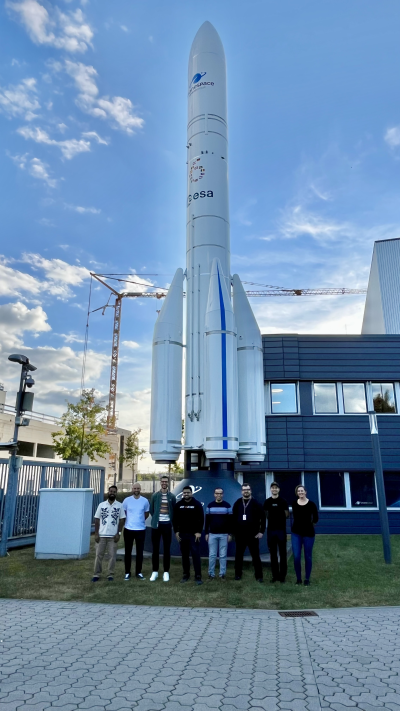
After this tour, we were guided through the construction site of Ariane 6 upper stage at ArianeGroup by Maurice Kollmer. Here, we learned a lot about the complexity of spacecraft, how Ariane launchers are able to deliver their payload at their destination and also the high safety standards accompanying all phases, from the production of first subcomponents to the final launch
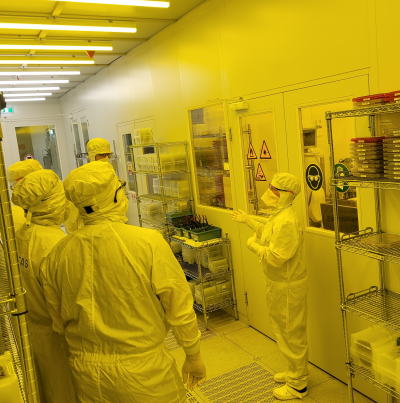
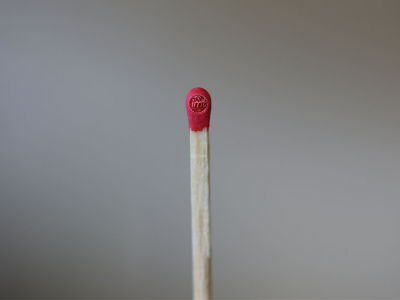
The second day was dedicated to the world of microtechnology and started with a lecture by Prof. Dr.-Ing. Björn Lüssem about cleanroom technology. Right after lunch, the theory was put into practice with a workshop inside the IMSAS cleanroom, guided by Melanie Kirsch, where we gained hands-on experience in photolithography and wet-chemical structuring of metallic thin films on a wafer. To demonstrate how small micrometer scale is, we examined structures fabricated using 2-photon polymerization first with the bare eye, then with the incident light microscope and finally revealed the structures using the scanning electron microscope (SEM), with all steps very well explained and carried out by Dipl.-Ing. Eva-Maria Meyer.
After leaving the miniature world, we visited the underworld of Bremen, a tour organized by the STATTREISEN Bremen, including the elephant monument crypt and the underground bunker close to central station, conserving parts of the history of Bremen behind thick walls
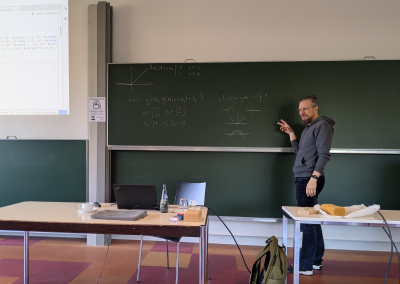
The final day of summer school 2025 was opened by a lecture of Prof. Dr. Dirk Lorenz about Physics-informed neural networks (PINNs), their implementation, opportunities and also challenges and presented multiple real time examples for the implementation in Python.
This was followed by a guided tour by Dr. Michael Koerdt and M.Sc. Elie Abi Aoun through the FIBRE labs on campus, presenting different methods to fabricate, investigate and characterize fibre composite components as well as different implementations of structural health monitoring.
2024

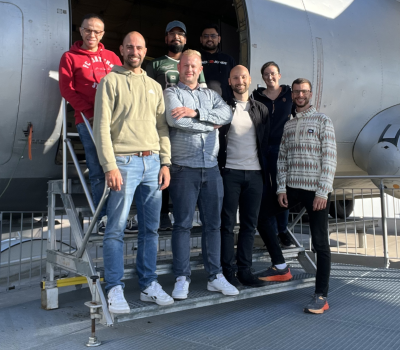
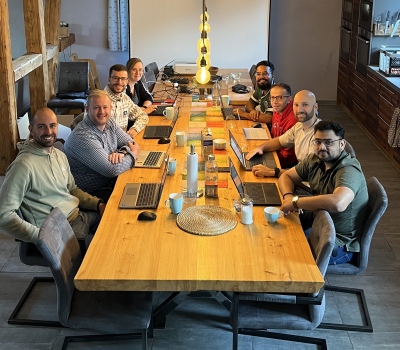
From September 10th to 13th, 2024, the FOR3022 Research Group successfully held its summer school in the beautiful Harz region near Wernigerode. Over the course of four days, the PhD students engaged in workshops, participated in collaborative activities, and experienced cultural excursions, thereby promoting both professional development and team spirit.
The summer school featured workshops designed to consolidate and organize the group’s existing research. These sessions laid a solid foundation for subsequent activities, ensuring alignment with the group’s objectives and achievements. The mornings consisted of workshops aimed at enhancing the FOR3022 homepage and planning future publications. These efforts improved the group’s digital presence and facilitated the initiation of upcoming collaborative projects.
Afternoons were reserved for team-building activities, including hikes through the scenic Harz landscape and a visit to the Wernigerode Aviation Museum. These excursions offered valuable opportunities for informal networking. Evenings were dedicated to cooking and dining together, further improving the sense of community and teamwork among the PhD students.
The event further included a presentation of a new collection edited by the FOR3022 spokespersons, showcasing the collective efforts and scientific contributions of the group. The final day wrapped up with a workshop focused on discussing the contents of the collection and outlining the project’s next steps, ensuring a thorough conclusion to the event.
The summer school 2024 was a success, allowing participants to enhance their expertise, generate innovative ideas for future projects, and strengthen the research network within the FOR3022. The combination of professional development, team-building activities, and cultural excursions created an ideal environment for sustained collaboration and research excellence.
We would like to thank all participants, organizers, and the host team for their commitment and contributions that made this summer school an unforgettable experience. We look forward to the next edition and the continued achievements of the FOR3022 Research Group.
2023
In the heart of Siegen, nestled between history and innovation, the Summer School of the DFG Research Unit 3022 brought together PhD candidates and researchers for three inspiring days of learning, collaboration, and exploration.
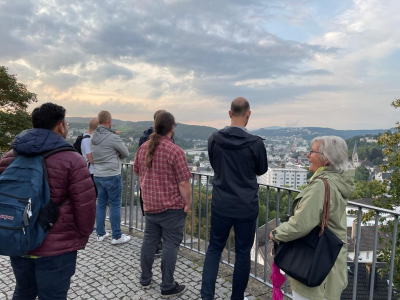
The event commenced with a welcome address from Prof. Dr. -Ing. Axel von Hehl, University of Siegen, followed by a captivating lecture by Prof. Rene Alderliesten from TU Delft, who guided us through the rich history and evolving future of fiber metal laminates. This intellectually stimulating start was followed by an exclusive tour of the cutting-edge research facilities at the University of Siegen, giving participants firsthand insight into the advanced work being conducted at the University. Later, a guided tour through the city offered a glimpse into Siegen’s vivid historical tapestry, setting the perfect backdrop for the academic discussions that followed.
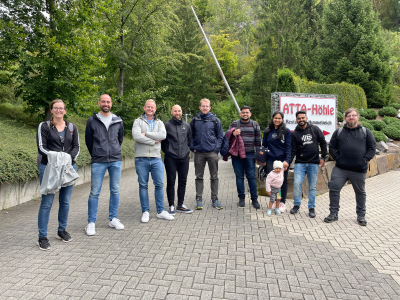
On the second day, we ventured beyond the city limits to the breathtaking Atta Höhle in Attendorn, one of Germany’s most impressive dripstone caves. The awe-inspiring natural beauty was complemented by a visit to the Automotive Center Südwestfalen, where technology and innovation are shaping the future of mobility. The day concluded with a warm and welcoming group dinner, fostering meaningful conversations and camaraderie among participants.
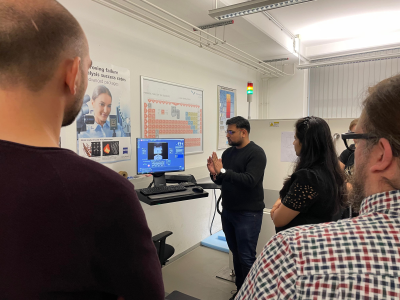
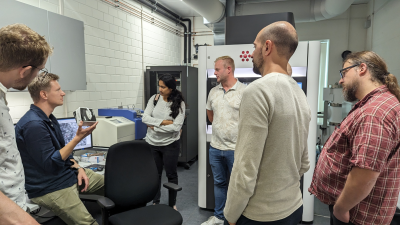
The final day featured a hands-on workshop on X-ray Computed Tomography led by M.Sc. Chirag Shah, followed by two outstanding research lectures. Mr. Sebastian Haller presented his work on measuring residual strain in intrinsic hybrids using FBG sensors and X-ray diffraction, while Ms. Anna-Lena Dreisbach offered deep insights into preload monitoring of bolted connections via electro-mechanical impedance spectra and acousto-ultrasonics. These sessions highlighted the diverse and dynamic research being carried out in the Department of Mechanical Engineering at the University of Siegen.
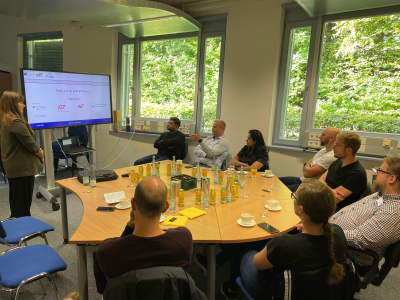
We concluded our Summer School with a delightful group lunch at a scenic restaurant in Siegen, closing the chapter on a truly enriching and unforgettable experience.
2022
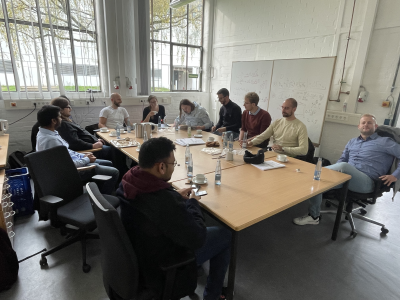
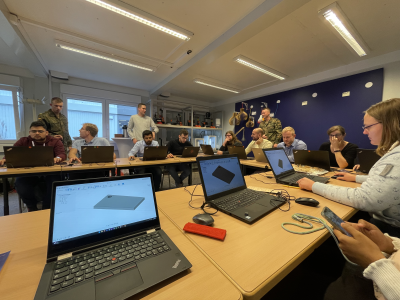
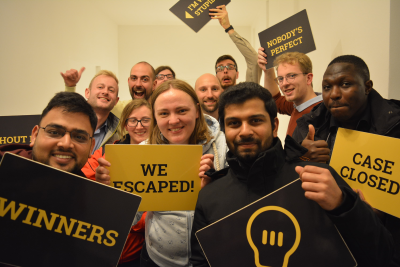
The third summer school of the research unit took place in Hamburg, shortly after an intensive period of proposal writing and the review of the project through the DFG.
On the first day, we were warmly welcomed to Hamburg by the project spokesperson Prof. Dr.-Ing. habil. Wolfgang Weber. The morning was dedicated to reviewing and discussing the research proposal together in a pleasant and collaborative atmosphere. Afterwards, we received insights into the electrical and mechanical laboratories of the Helmut-Schmidt-University, including a detailed guided tour demonstrating the classical and mordern manufacturing and assembly of printed circuit boards. In the afternoon, the OpenLab Hamburg held a workshop on additive manufacturing, introducing us to the fundamentals of 3D printing technologies and providing the opportunity for hands-on experience. In the evening, a team-building event was organized, during which we successfully completed an escape room, demonstrating and strengthening our teamwork skills.
The following day, we visited the Airbus final assembly line in Hamburg-Finkenwerder. The guided tour provided us with valuable insights into aircraft assembly processes as well as the practical application of composite materials. We observed how major fuselage sections are joined, how wings and tail units are attached, and how various systems—including avionics, hydraulics, and cabin interiors—are integrated into the aircraft. Additionally, we gained a deeper understanding of how advanced composites components are employed to reduce weight, enhance structural integrity, and improve overall performance. This behind-the-scenes look at modern aviation manufacturing underscored the complexity of bringing an aircraft from individual parts to a fully operational product, further enriching our appreciation for aerospace engineering.
2021
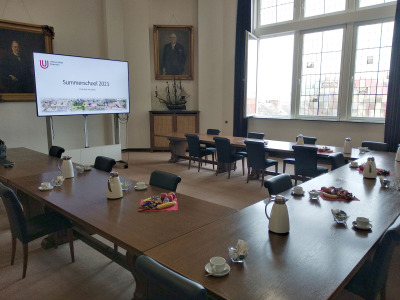
The second summer school of the Research Unit FOR3022 was held in Bremen. It was a three-day event which was once again organized in compliance with strict corona prevention measures. The summer school took place in a conference room kindly provided by the Bremen Cotton Exchange.
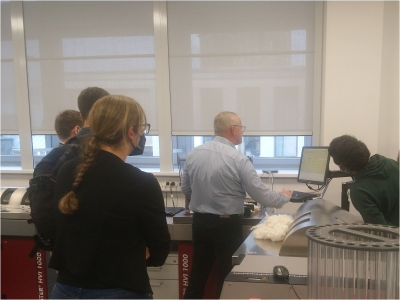
The welcome speech on day one was given by Prof. Herrmann (FOR3022 PI, FIBRE), introducing the group to the close connection between the Bremen Cotton Exchange and the FIBRE since the latter originated from the Cotton Exchange in the past. After that, Ms. Hortmeyer (Cotton Exchange Bremen) held a lecture on the history of the Cotton Exchange and the meaningful position of the building in former times. Further lectures about production process monitoring for composite materials and an innovative nondestructive testing method by Mr. Koerdt (FIBRE) and Mr. Abi Aoun (FIBRE) as well as a guided tour through the cotton exchange, including the laboratories and an introduction to different testing methods to determine product quality of cotton probes done by Mr. Drieling (FIBRE) concluded the day.
On the second day, an extensive lecture about the research topics of the IMSAS and on measuring mechanic vibrations with microsensors was held by Prof. Lang (FOR3022 PI, IMSAS), with a subsequent discussion on quasistatic and quasifree sensor principles. The afternoon was dedicated to a workshop on dissertation management, by an external moderator, to help the participants to get into their dissertation writing routine.
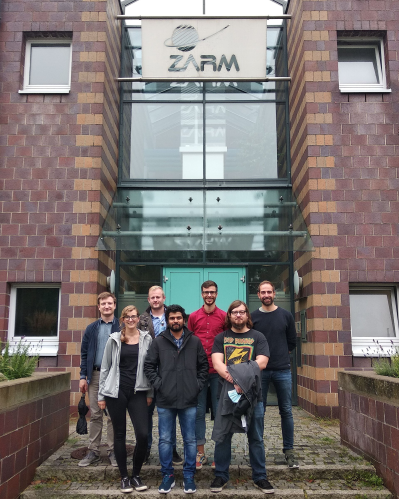
The last day of summer school 2021 in Bremen contained another workshop, this time focused on one of the research topics of one FOR3022 research topics: Machine learning, given by PD Dr. Bosse (FOR3022 PI, Mathematics/Computer Science) providing theoretical knowledge as well as practical tasks to get a better understanding of this seminal topic. The last event on the list was a guided tour through the ZARM Bremen, having one of the most impressive buildings on the campus of the University of Bremen, the drop tower. The tour included a short lecture about microgravity, the functionality of the drop and catapult system of the tower, as well as an insight into the laboratory.
2020
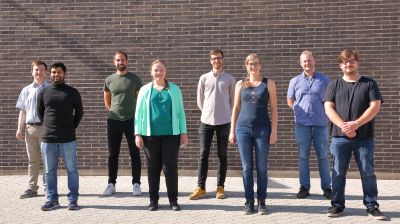
The first summer school of the Research Unit FOR3022 took place from 09/21/2020-09/23/2020 in Braunschweig. The event aimed to bring the doctoral students of the subprojects into exchange through various actions.
The organizers from Braunschweig had worked out an extensive programme following strict corona prevention measures. Lectures regarding the history of the FOR3022, methods of structural health monitoring using guided ultrasonic waves as well as an introduction to ultrasonic applications in medicine were given by Prof. Sinapius (FOR3022 spokesperson, IMA), Dr. Schmidt (FOR3022 PI, DLR) and Dr. Wilkens (Physikalisch-Technische Bundesanstalt, Braunschweig). The summer school participants were given an insight into the clean room of the Institute of Microtechnology (participating institute in FOR3022) and the femto-second-laser was demonstrated. The summer school programme included the manual fabrication of FML at the Institute of Mechanics and Adaptronics (participating institute in FOR3022) and the elaboration of the contents of the research unit’s work packages under the professional guidance of an external moderator. On the last day, the participants were welcomed on the DLR site in Braunschweig to have a guided tour at the Institute of Composite Structures and Adaptive Systems and the unique occasion to try out the AVES – Air Vehicle Simulator.
We thank all speakers and participants for the success of the event!

