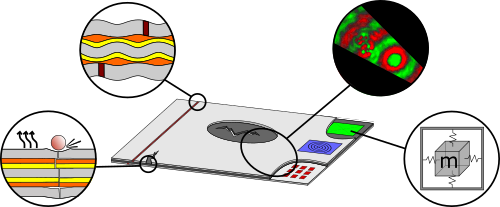
Effect of multiple state characteristics on damage and wave propagation and compensation methods for damage detection
Principle Investigators:
- Prof. Dr.-Ing. Axel S. Herrmann – until 31.08.2024
- Prof. Dr.-Ing. habil. David May – since 01.09.2024
- Prof. Dr.-Ing. Axel von Hehl
Motivation:
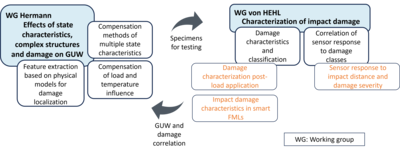
For advanced Structural Health Monitoring (SHM), methods that concurrently compensate for temperature and static load effects on Guided Ultrasonic Wave (GUW) propagation are essential for accurate damage diagnostics. Establishing robust damage classes can enable precise correlation of sensor data with specific damage types. With a focus on prevalent impact damage in aircraft, applying mechanical loads can highlight subtle variations in damage characteristics, facilitating refined subclassification. This expands the existing damage taxonomy and enriches the GUW database, ultimately improving damage detection accuracy and enhancing the reliability of SHM systems.
Aims:
- Developing methods for simultaneous compensation of temperature and static load effects on GUW.
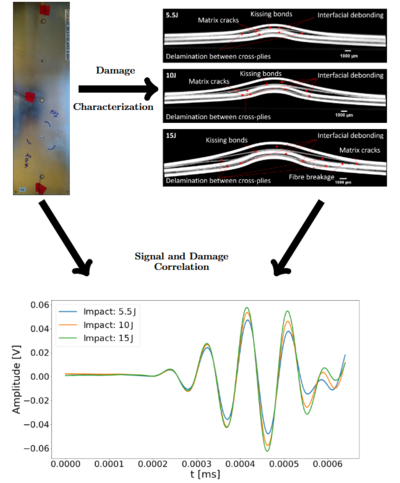
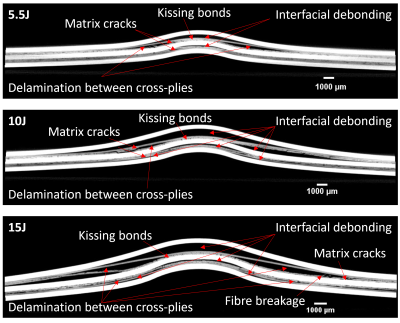
- Exploring the effects of loads on impact damage to reveal evolving damage characteristics providing a distinctive damage classification
Approach:
- Extraction of GUW signal features that vary with temperature and load to estimate GUW behavior under changing environmental conditions
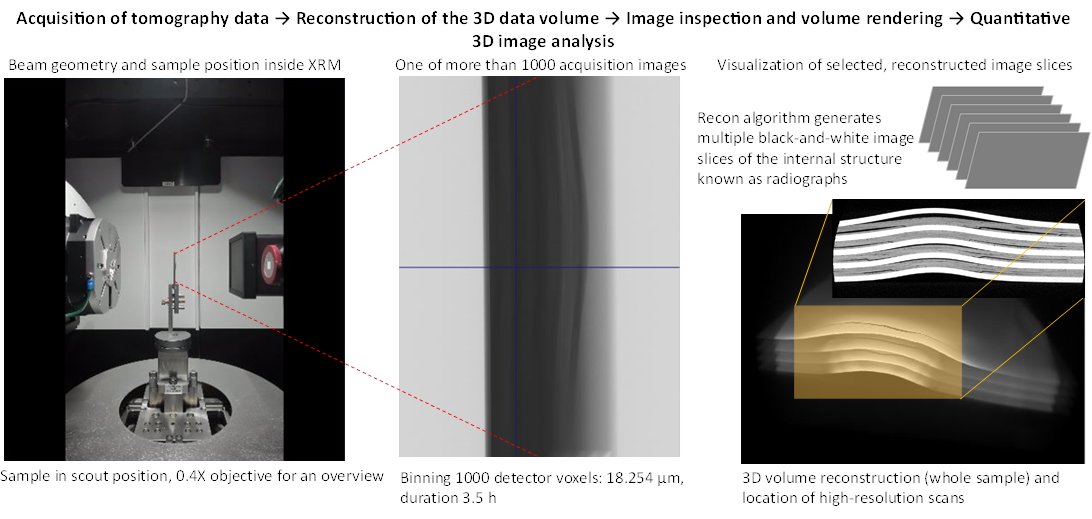
- Specimens are analyzed for damage patterns under near-service loading (≤50% yield strength) using X-ray CT (pre and post-application) and digital image correlation.
 FOR3022